
UX/UI, PRODUCT DESIGN // 2025
MAGEN
A mobile and Tablet emergency response platform designed to improve coordination between dispatchers, field teams, and hospitals during critical incidents.
[DETAILS]
TYPE
UX/UI Product Design
YEAR
2025
PLATFORM
Mobile and Tablet
TOOLS
Figma

[THE PROBLEM]
Emergency response teams operate under extreme time pressure with fragmented information, leading to cognitive overload and delayed decisions.
In emergency situations, every second matters, yet critical information is often spread across multiple people, systems, and communication channels. Dispatchers must assess chaotic incoming reports, decide what resources to send, and coordinate with field teams and hospitals in real time. This creates friction, delays, and uncertainty in moments where speed, clarity, and prioritization are essential.
[THE SOLUTION]
An intelligent emergency response system that centralizes information, prioritizes decisions, and reduces cognitive load in real time.
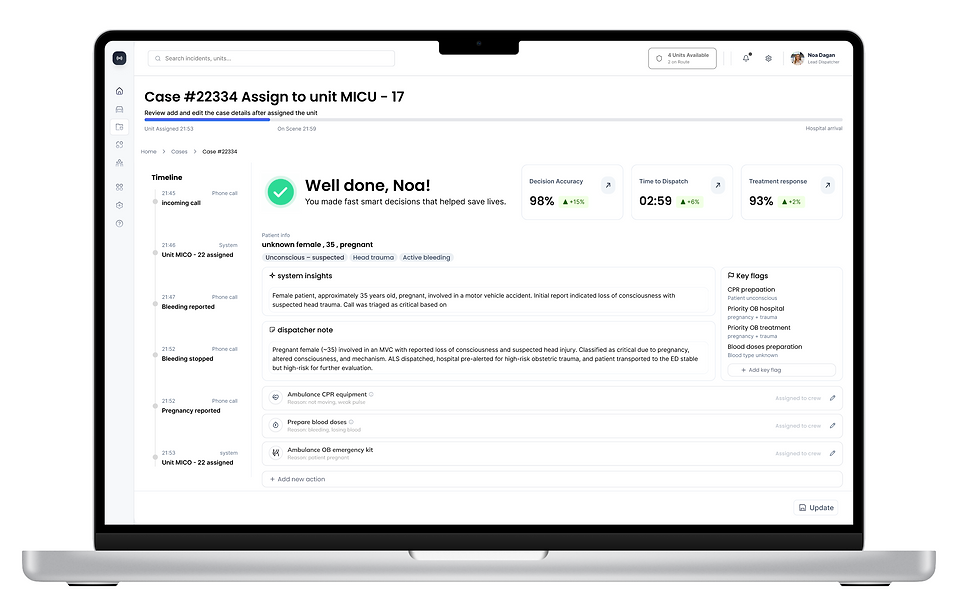
Magen supports dispatchers during live emergency calls by reducing manual work and surfacing the most important information in real time. The system combines AI-based case classification, real-time decision support, intelligent routing, live transcription, treatment suggestions, and automated activity logging into one unified interface. This helps dispatchers act faster, stay focused, and make more informed decisions under pressure.
[FINAL PRODUCT]

[HOW MIGHT WE]
HMW Reduce dispatcher load without slowing response?
HMW Surface critical information instantly?
HMW Decrease the overlap work between dispatch, field teams, and hospitals?
[MAIN SCREENS]



[PERSONA]

Noa Cohen
Age: 32
Location: Tel Aviv
Occupation: Dispatcher

David Hemo
Age: 47
Location: Ramat Gan
Occupation: Ambulance Driver


[THE PROCESS]
Understanding the problem
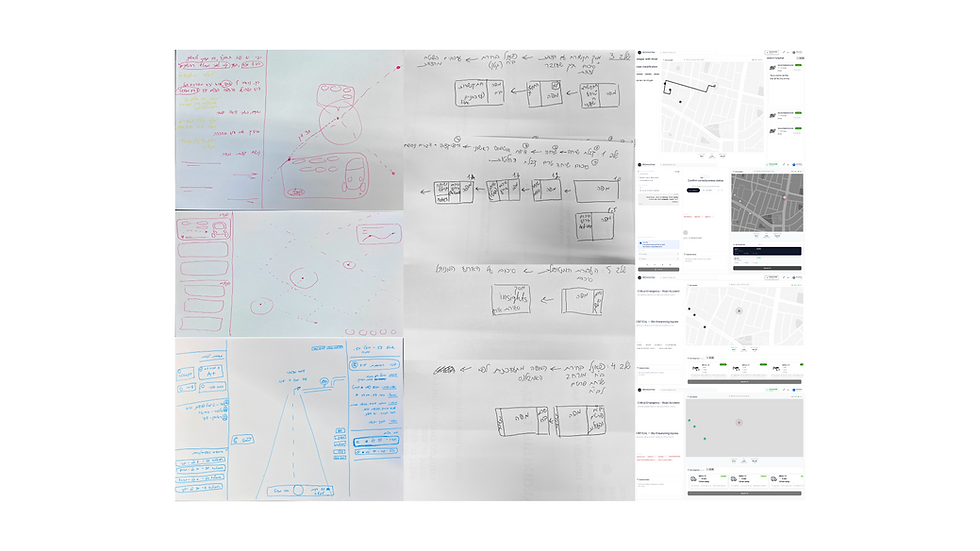
The project began by examining the dispatch environment as a high-pressure operational system. The main issue was not only delayed response, but the dispatcher’s cognitive burden during live incidents: listening, thinking, documenting, prioritizing, and coordinating at the same time.
Defining the core challenges
Research highlighted three core problems: high cognitive load during time-critical calls, the risk of missing critical details, and the slowdown caused by manual logging. These became the foundation for the product direction.
Framing opportunity areas
From the research, several “How Might We” questions emerged around reducing dispatcher load, surfacing critical information instantly, and improving coordination between dispatch, field teams, and hospitals. These framed the product as a support layer rather than just another interface.
Translating insights into features
The product direction focused on AI-supported features that directly address the identified challenges. Instead of adding more complexity, each feature was designed to reduce friction, automate repetitive work, and help dispatchers focus on fast and accurate response.
Outcome
Magen is a real-time emergency response system designed to improve coordination, clarity, and speed across the full response journey. The final product combines incident intake, prioritization support, responder coordination, live updates, and cross-team visibility into one connected experience. It creates a stronger operational flow between dispatch, field response, and care teams, helping reduce friction in moments where fast decisions matter most.
© 2026 MAYA SEGAL